Machine Learning in Multi-Omics
MLiMO · Málaga · Paris
Harnessing topology, deep learning, and integrative multi-omics to unravel the complexity of biological systems — from tumour microenvironments to plant-virus interactions.
Latest updates
New publication on topological feature engineering for retrospective cohort risk stratification following lung transplantation. Tran-Dinh, Atchadé, Tanaka, Morilla et al.
Study combining multimodal deep learning with plant transcriptomics to uncover how plants integrate environmental signals at the molecular level. Vomo-Donfack, León Morcillo, Morilla et al.
New preprint introducing a federated learning framework grounded in persistent homology for privacy-preserving personalised models. View ↗
About the group
At Morilla Lab (MLiMO), we harness advanced machine learning and integrative multi-omics approaches to unravel the complexity of biological systems. Our interdisciplinary research bridges fundamental mathematics with life sciences.
From topological data analysis applied to tumour microenvironments to deep learning models for plant-virus interactions — we develop robust, data-driven methodologies that translate molecular insights into advances for precision medicine and sustainable agriculture.
Research areas
Developing and applying cutting-edge algorithms for biological data analysis and predictive modelling, from transformers to graph neural networks.
Exploring topological and geometric approaches — persistent homology, manifold learning — to unveil robust patterns in high-dimensional multiomics data.
Combining genomics, transcriptomics, proteomics, and spatial data to achieve a holistic, systems-level view of biological complexity.
Investigating tumour–host interaction dynamics, focusing on immune modulation, spatial heterogeneity, and clinical risk stratification.
Leveraging statistical, computational, and AI-driven methods to uncover mechanistic insights across human and plant disease systems.
Bridging discoveries to clinical outcomes and sustainable agricultural practices — from precision oncology to plant-pathogen resistance.
Active projects
Approches intégratives des mathématiques (AI), de l'informatique et de la biologie pour la modélisation de systèmes complexes.
Modélisation multimodale et dynamique de l'évolution de la Leucémie Lymphoïde Chronique — multimodal dynamic modelling of CLL evolution.
Research on polygenic inheritance in cancer, inflammatory, and cardiovascular diseases using topological deep learning and optimal transport.
Spatial transcriptomics analysis of TYLCV virus in tomato using manifolds integration and topological machine learning.
ML framework enhancing lung transplantation mortality risk prediction by integrating topological data analysis with transformer architectures.
Scientific output
27+ peer-reviewed articles across machine learning, mathematical biology, and multi-omics.
Intellectual property
First prediction tool for responses to first- and second-line treatments in acute severe ulcerative colitis. One classifier of fifteen colonic microRNAs plus five biological values at admission achieving 96.6% prediction accuracy for discriminating steroid responders from non-responders.
DeepCol — an AI-driven method developed by Dr. Ian Morilla for prediction of acute severe colitis treatment response using deep learning.
Community & events
We actively organise and co-organise international workshops at the intersection of topology, geometry, and machine learning in biology.
A five-days advanced bioinformatics course especially aimed at those who want to stay up to date with the latest advances in bioinformatics data analysis and on open challenges in machine learning.
Workshop exploring cutting-edge deep learning methodologies for the integration of heterogeneous multi-omics modalities, including spatial transcriptomics, single-cell RNA-seq, proteomics, and epigenomics in human diseases. Emphasis on practical reproducibility and open benchmarking.
Full-day workshop on applications of topological data analysis in clinical and biomedical contexts. Covered persistent homology, mapper algorithms, and their integration with transformers and GNNs for patient stratification and drug response prediction.
Workshop at the interface of algorithmic biology and modern AI, with sessions on learning from sparse clinical annotations, representation learning for genomics, and emerging applications of federated learning in multi-site cohort studies.
The people
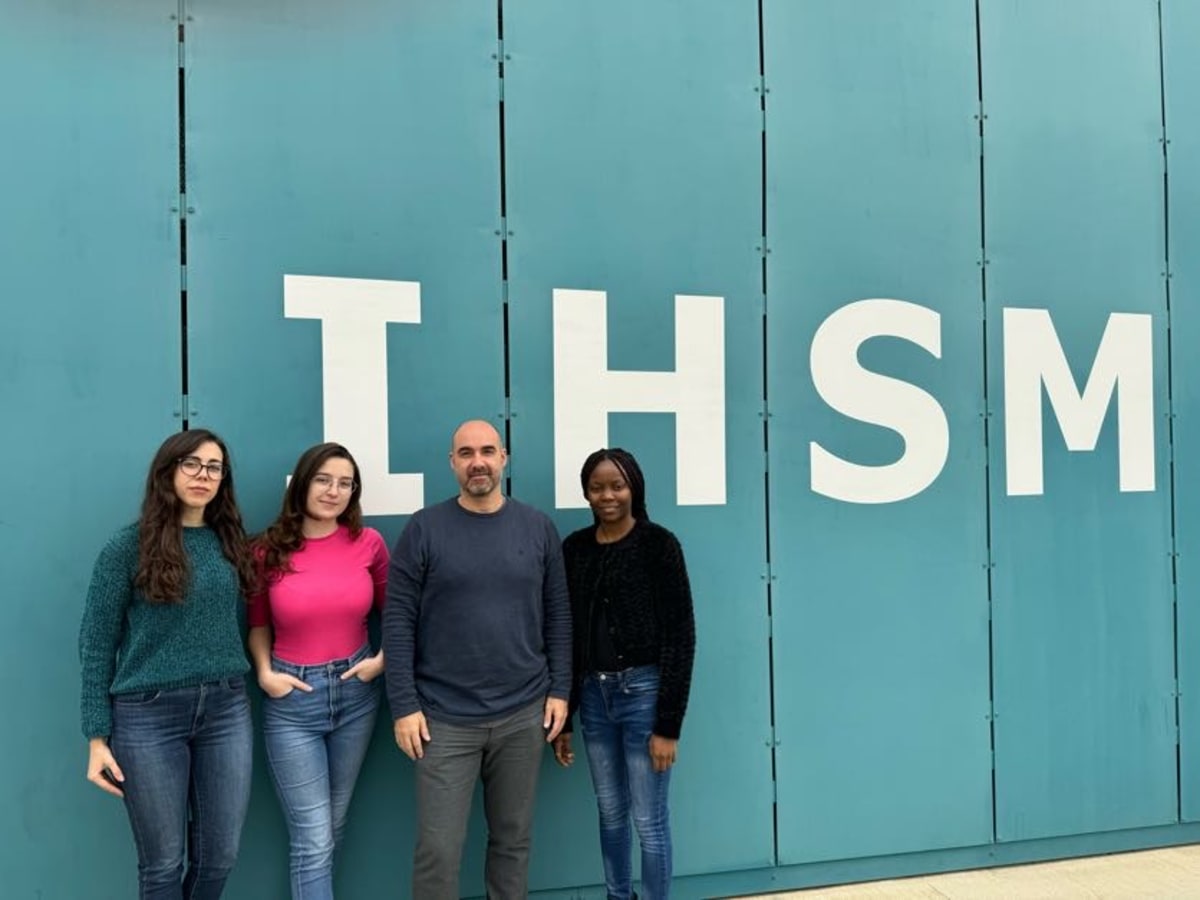
Dr. Ian Morilla leads the MLiMO group at IHSM La Mayora (UMA–CSIC, Málaga) and holds a research position at LAGA–Institut Galilée (CNRS, Sorbonne Paris Nord). His work bridges topological data analysis, deep learning, and integrative multi-omics across human disease and plant biology. He has authored 27+ peer-reviewed articles and holds two patents in AI-driven clinical prediction.
Open positions
We are a collaborative, curiosity-driven team working at the frontier of mathematics, computation, and life sciences. We welcome motivated individuals who are excited about developing novel methods and applying them to real biological and clinical problems.
We are seeking a postdoctoral researcher to develop novel TDA-integrated deep learning methods for multi-omics analysis of tumour microenvironments and polygenic disease modelling. The position is co-funded through CNRS/IHSM and involves collaboration with clinical partners.
PhD opportunity in the Transcend-id and Polygenic Deep Transport projects. The candidate will develop integrative deep learning and optimal transport methods for understanding complex polygenic diseases from multi-omics data.
6-month M2 internship (or equivalent) extending the PTOPOFL framework to new clinical use-cases. The student will work on privacy-preserving federated learning, implementing topological feature extraction pipelines across distributed hospital datasets.
We welcome visiting researchers, sabbatical stays, and new collaborative projects. If your work touches on topology, machine learning, multi-omics, or computational biology, we'd love to hear from you — whether for a short visit or a longer partnership.
Institutional ties
Bulevar Louis Pasteur, 49. 29010 Málaga. MLiMO plant-virus interaction research hub.
99 avenue Jean Baptiste Clément, 93430 Villetaneuse. Équipe Mathématiques pour la Biologie et les Images (MBI).
Visit MBI team ↗Education
2021 — Present · Université Sorbonne Paris Nord
Introduction à l'Analyse Topologique des Données (TDA) — mettant l'accent sur l'homologie persistante et ses applications en biologie computationnelle. Applications concrètes: reconnaissance de formes, classification de neurones et bactéries par spectroscopie moléculaire, identification de formes de cancer par IRM, en utilisant des approches d'IA avancées.
Get in touch
Spain —
IHSM La Mayora, Bulevar Louis Pasteur 49
29010 Málaga, España
France —
LAGA – Institut Galilée
99 av. Jean Baptiste Clément
93430 Villetaneuse, Paris